Ethiopia on a plate
Ethiopian cuisine is defined by a colourful, diverse range of meat and vegetable dishes. Discover the traditions behind every dish at Lalibela.
Ethiopia on a plate
Ethiopian cuisine is defined by a colourful, diverse range of meat and vegetable dishes. Discover the traditions behind every dish at Lalibela.
The coffee ceremony
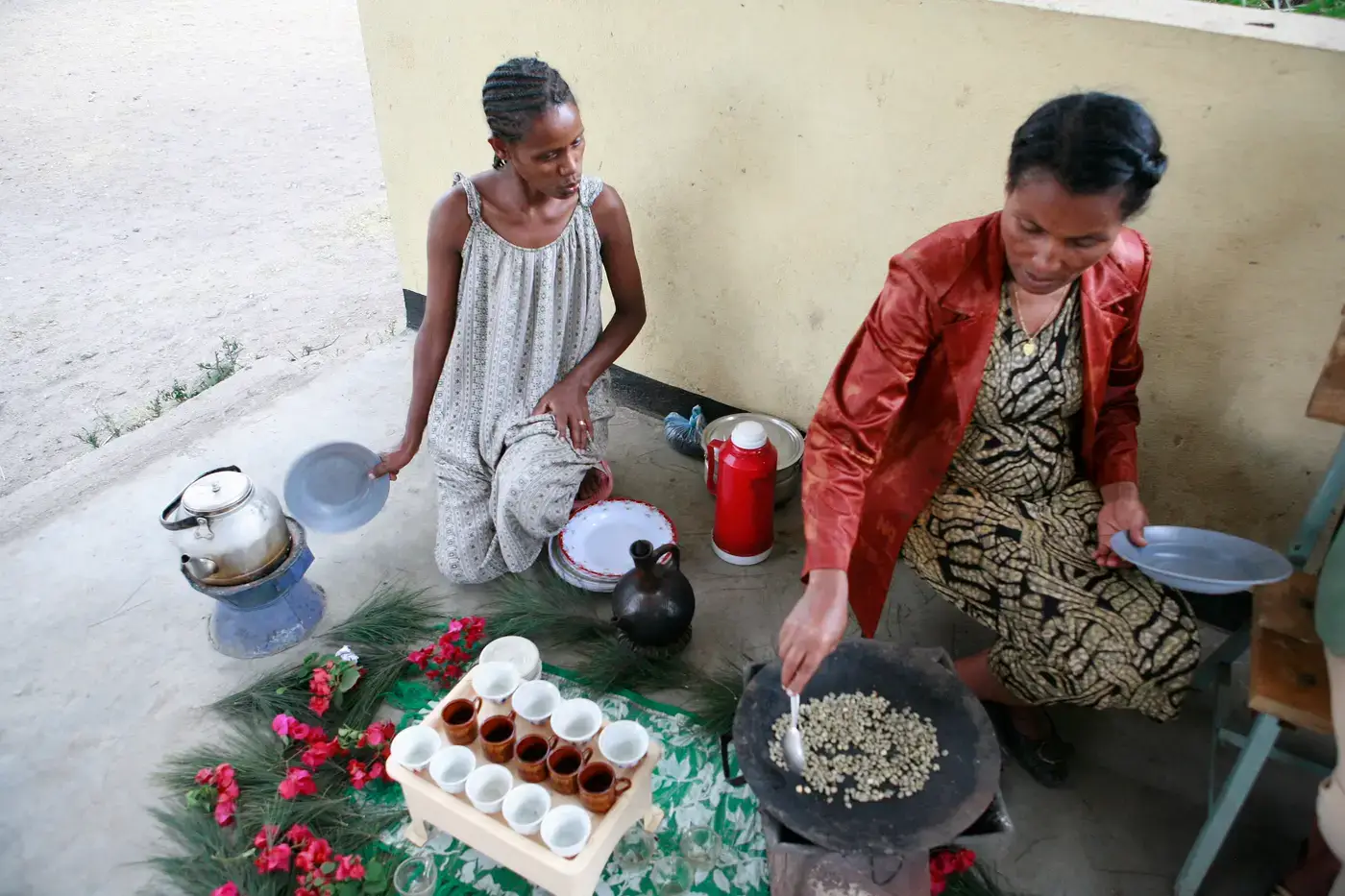
Coffee was discovered in Ethiopia. We hold the traditional ceremony every evening around 6 pm: beans are roasted fresh, ground and served in three rounds – a ritual of hospitality.
Injera & berbere
Injera, the fermented teff flatbread, is the heart of every meal. Teff is naturally gluten-free; we bake injera from pure teff and with wheat flour – just ask us. Alongside it comes berbere, a spice blend of chilli, ginger, fenugreek and more.
Sharing from the gebeta
Traditionally, family and friends eat together with their hands from one large round tray – the gebeta. Sitting together creates a natural, warm atmosphere.
Fasting food & vegan
A large part of Ethiopian cuisine is naturally vegan – shaped by the long fasting periods of the Ethiopian Orthodox tradition. That is why you will find so many plant-based dishes with us.
Coffee – born in Ethiopia
Legend tells of the goatherd Kaldi in the Kaffa region of the Ethiopian highlands, who noticed how lively his goats became after eating red coffee cherries. From here coffee began its journey around the world – and nowhere is it celebrated as it is in its homeland.
The coffee ceremony is a ritual of hospitality: green beans are roasted fresh, ground in a mortar and brewed in the clay jebena pot. It is served in three rounds – Abol, Tona and Baraka. At Lalibela we brew Ethiopian coffee fresh so you can experience this piece of culture with all your senses.
Injera & teff – the heart of every meal
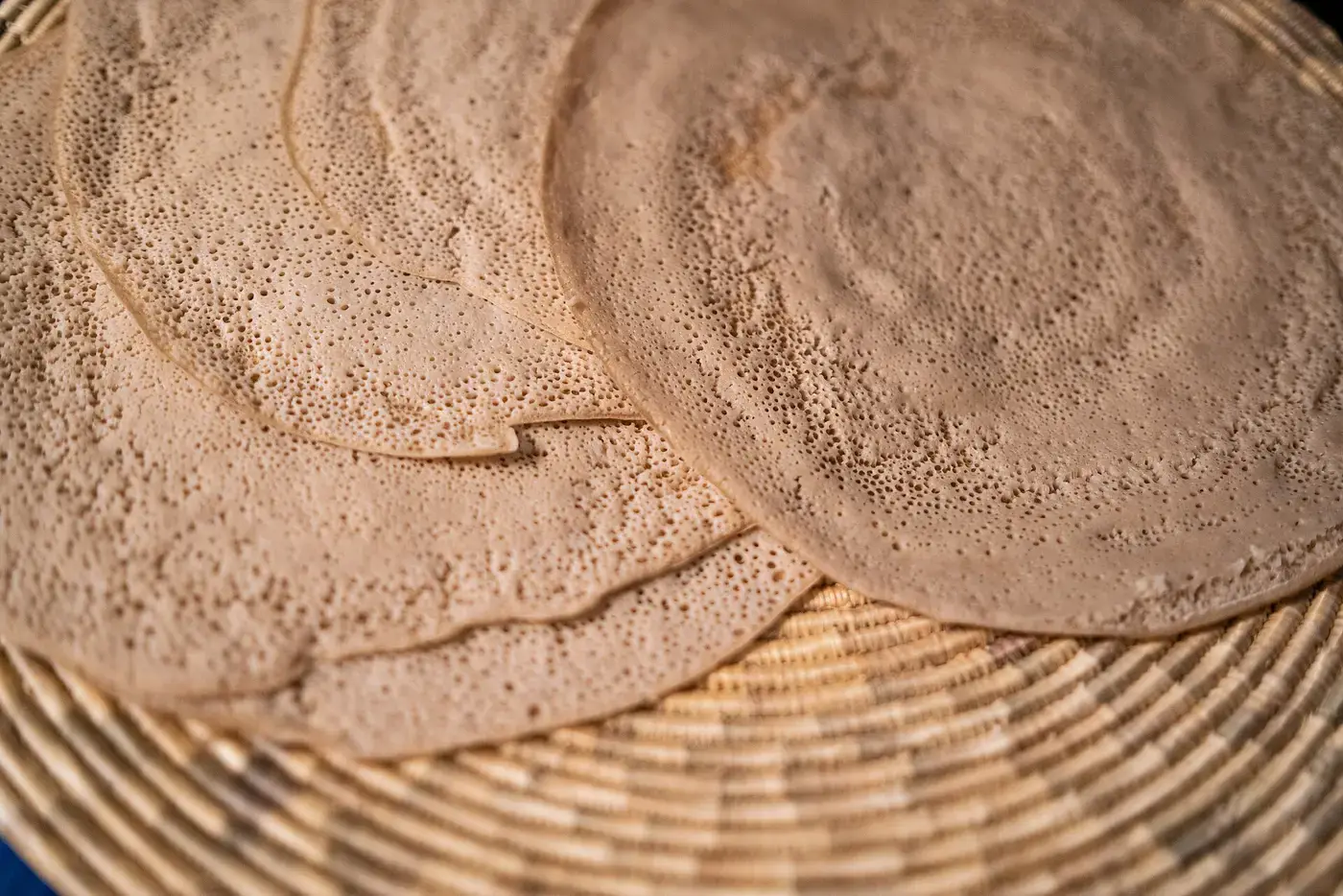
Injera is made from teff, a tiny ancient grain from the Ethiopian highlands. Teff is naturally gluten-free and rich in iron, calcium and fibre. The batter ferments for two to three days – giving injera its characteristic mildly sour taste and its spongy structure full of tiny pores.
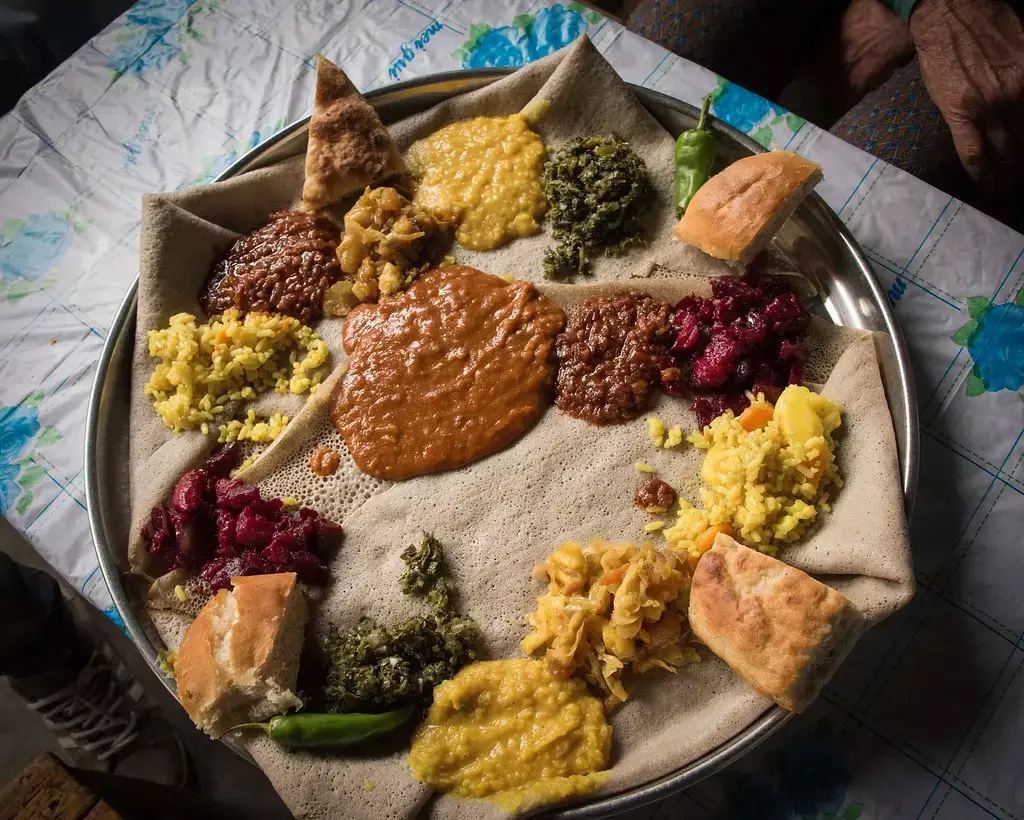
All dishes are arranged on the injera. You tear off small pieces and use them to scoop up wat and vegetables – the bread is plate and cutlery in one. At Lalibela we serve every dish on fresh injera, gluten-free on request.
Berbere – the soul of the cuisine
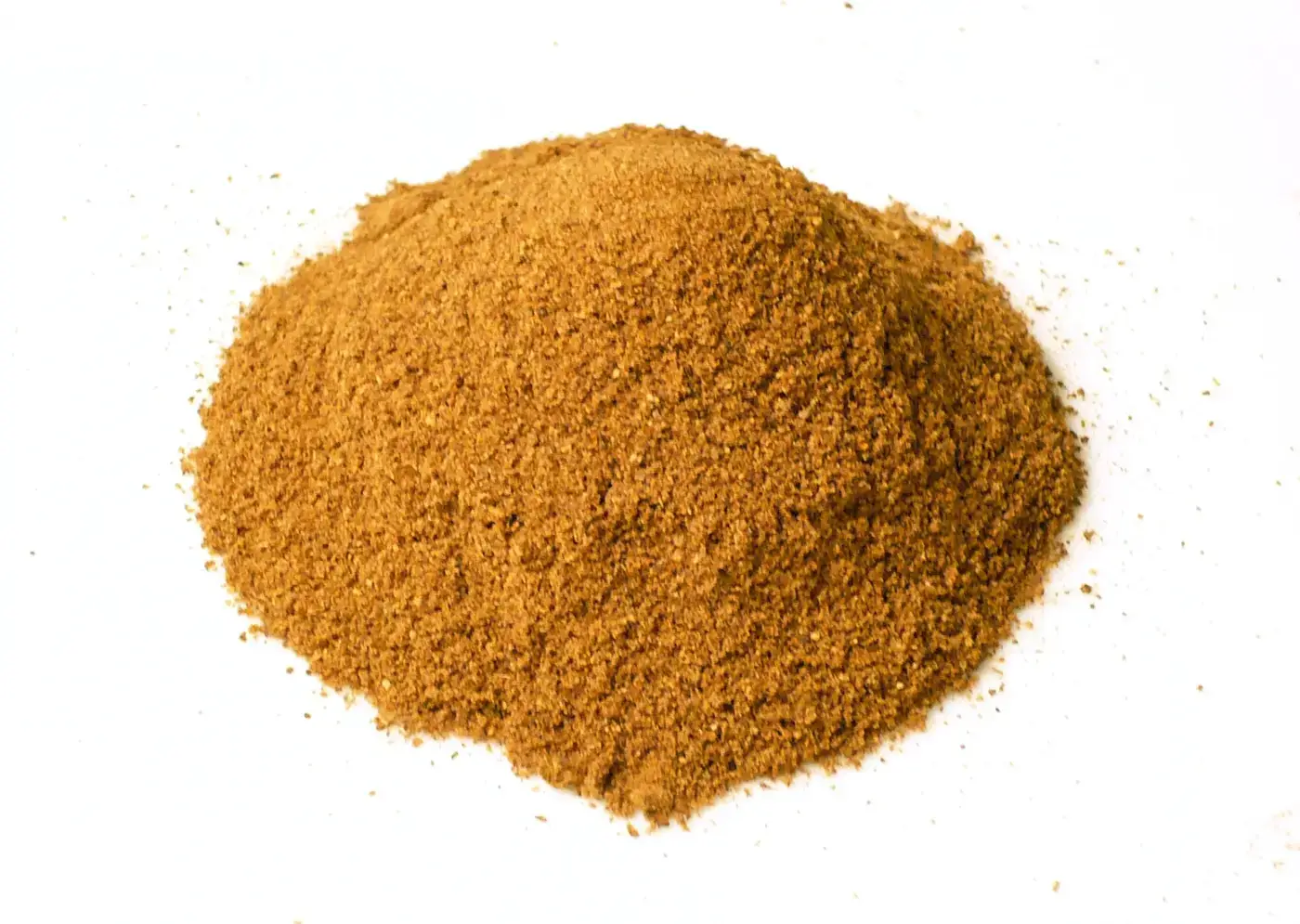
Hardly any dish is complete without it: berbere is the deep-red spice blend that gives Ethiopian cuisine its unmistakable character. Chilli, ginger, garlic, fenugreek, cardamom, cloves and more are dried, roasted and finely ground – every family and every kitchen has its own recipe.
Berbere seasons the classic wat dishes such as Doro Wat and Misir Wat, bringing depth, warmth and a gentle heat. If you prefer it milder, choose an alicha dish without chilli. There is something for every taste.
Eating together – gursha & hospitality
In Ethiopia, people eat together from one large plate. A special sign of affection is the gursha: you offer the person opposite a bite of injera by hand – a gesture of closeness among family and friends. Eating here is not a quick way to get full, but a social ritual.
It is exactly this warmth that we want to pass on at Lalibela. Whether for two, with family or in a large group: here you sit together, share the dishes and take your time. “Nobody eats alone with us” – for us that is more than just a phrase.
Our menu
Traditionally served on fresh injera – to share from one plate. Many dishes are naturally vegan.
Frequently asked questions
Answers to the questions we are asked most often.
Is the food really vegan?
A large part of Ethiopian cuisine is naturally vegan – especially during the fasting periods. At Lalibela we offer many vegan and vegetarian dishes as well as gluten-free injera on request – just ask us.
What is injera?
Injera is an airy, slightly sour sourdough flatbread made from teff flour. It serves as plate and cutlery in one – dishes are served on top of it and eaten by hand.
Is the injera gluten-free?
Teff is naturally gluten-free. We bake injera in two versions: from pure teff and with wheat flour. If you want or need to eat gluten-free, please speak to our staff – we will then serve you the gluten-free injera.
When does the coffee ceremony take place?
The traditional Ethiopian coffee ceremony takes place every evening around 6 pm: freshly roasted beans, ground and served in three rounds.
Stories from Habesha
Articles about Ethiopia, Eritrea, Lalibela, Addis Ababa, coffee and Habesha culture.
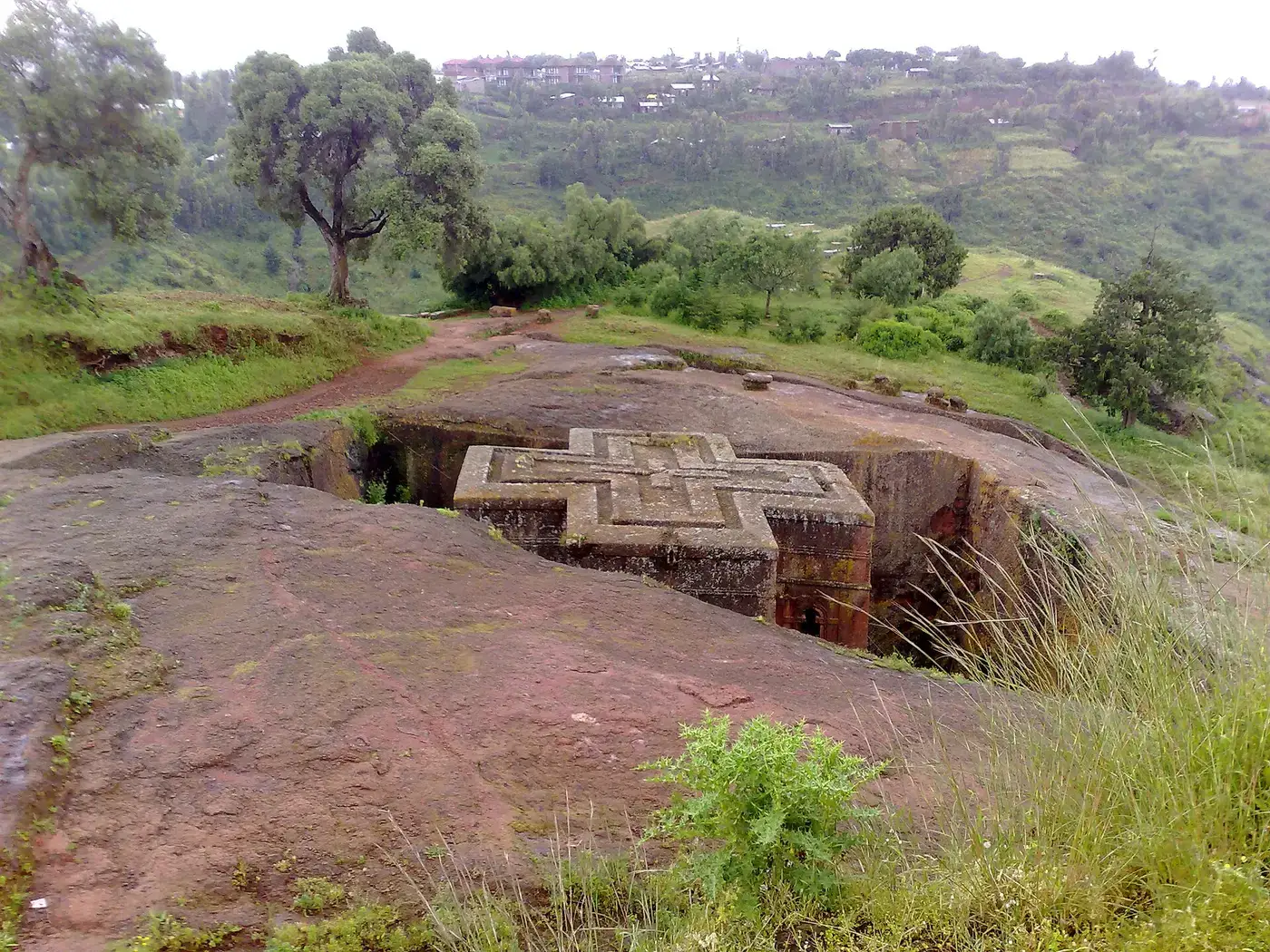 Kultur & GeschichteLalibela: Die Felsenkirchen und das achte WeltwunderElf monolithische Kirchen, aus dem blanken Fels gehauen – warum Lalibela als „achtes Weltwunder" gilt und unserem Restaurant den Namen gab.
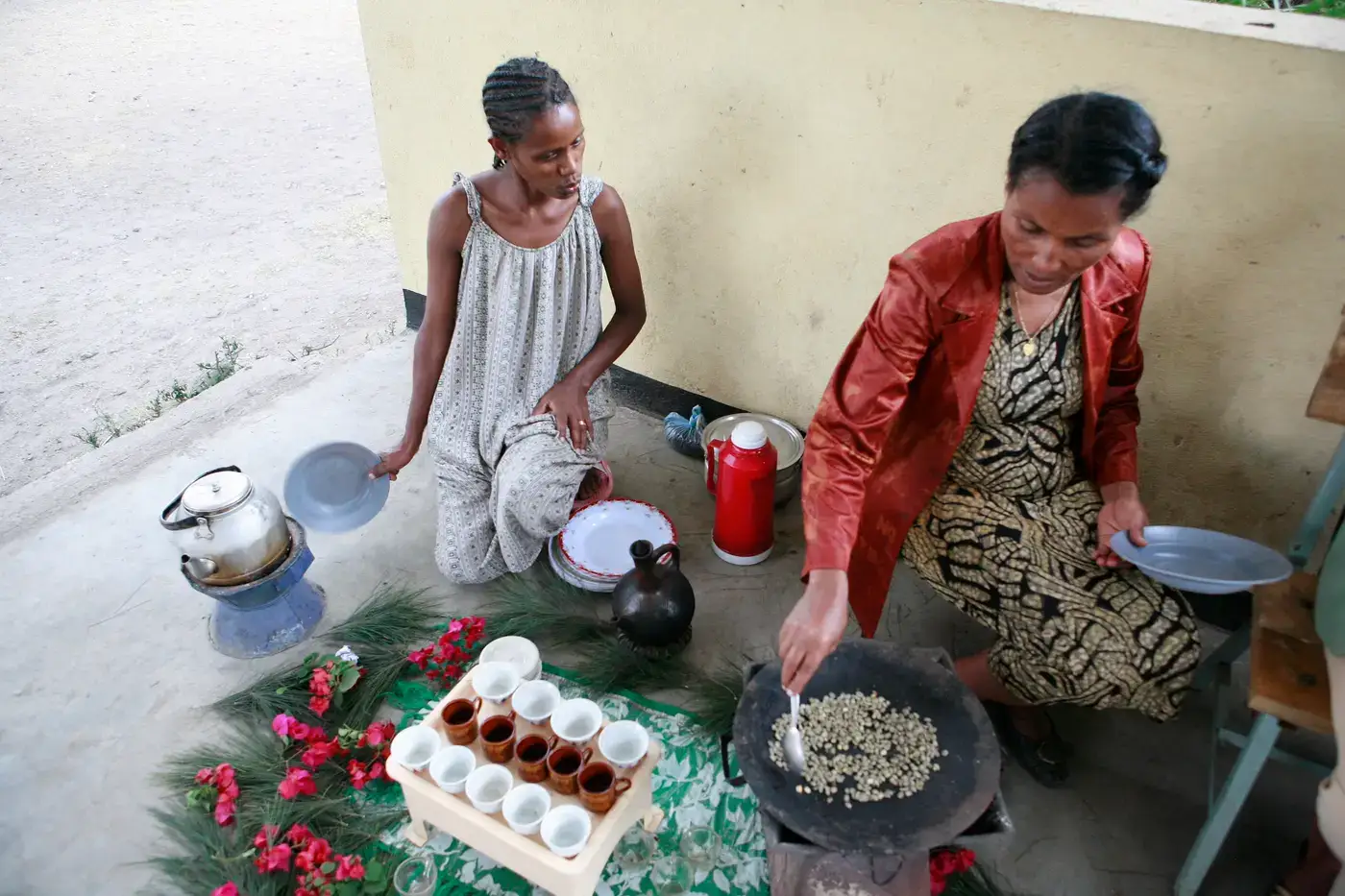 Kaffee & KulturDie äthiopische Kaffeezeremonie: Buna in drei RundenKaffee wurde in Äthiopien entdeckt. Die traditionelle Kaffeezeremonie ist bis heute ein Ritual der Gastfreundschaft – wir erklären, wie sie abläuft.
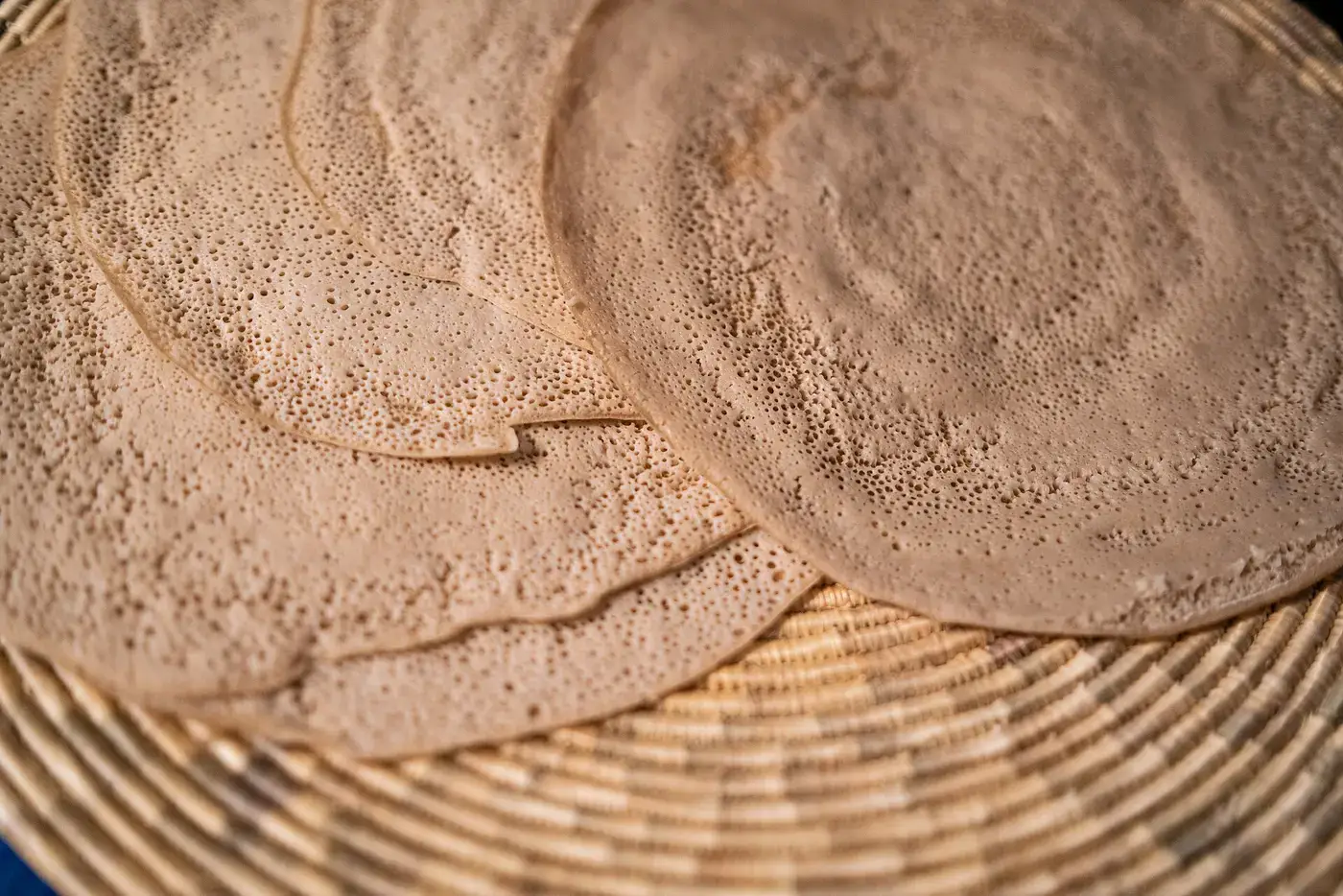 KücheInjera & Teff: Das glutenfreie Nationalbrot ÄthiopiensInjera ist Teller, Besteck und Grundlage zugleich. Wir erklären, warum das fermentierte Teff-Fladenbrot so besonders und von Natur aus glutenfrei ist.
Reserve a table
Book online in a few steps. Your request goes straight to our team in Kreuzberg.
- Reserve online instantly
- For groups of up to 50 guests
- Confirmation by email
Prefer to reach us directly? Write to us:info@lalibela.de